

Why Your Body Was Designed to Carry Things

The Everyday Strength Most Adults Don't Realize They're Losing
We've accidentally outsourced one of the most important human movements.
For thousands of years, carrying things wasn't considered exercise. It was simply part of everyday life. People carried water from rivers, gathered firewood, hauled tools across fields, transported food, carried children, and moved supplies wherever they needed to go. Strength wasn't something people scheduled into their calendars three days a week. It was built through the ordinary responsibilities that life demanded.
Today, our world looks much different. Grocery carts replace carrying baskets. Elevators replace stairs. Rolling luggage glides effortlessly through airports. Packages arrive on our front porch with the click of a button, and many of the physical tasks that once challenged our bodies have gradually disappeared. There's nothing wrong with convenience—it has undoubtedly improved our quality of life in many ways—but convenience has also removed countless opportunities for our bodies to practice movements they were designed to perform.
The result is something I see regularly as a coach. Many adults don't necessarily struggle because they're weak in a traditional sense. They struggle because the everyday physical demands of life have quietly become more challenging than they used to be. Carrying groceries from the car leaves them winded. Lifting luggage into an overhead compartment feels intimidating. Spending an afternoon helping someone move or working in the yard results in soreness that lingers for days. The tasks haven't become harder. Our exposure to them has simply become less frequent.
I was reminded of this not long ago while talking with a client who had just returned from several weeks of business travel. Before leaving, they had done an excellent job of consistently adding walks to their weekly routine. They weren't training for a race or trying to reach an ambitious step goal. They were simply making walking a regular part of their life, and over time they had begun noticing improvements in both their stamina and their overall energy.
Travel, however, has a way of disrupting even the best routines. Flights, hotel stays, unfamiliar schedules, and long workdays gradually pushed walking out of the picture. During our first session after they returned, one of the first things they mentioned wasn't weight gain or missed workouts. Instead, they talked about how different they felt physically. Their energy wasn't what it had been before the trip, and everyday activities seemed just a little more taxing than they remembered.
What stood out to me wasn't the fact that walking helped them feel better once they resumed the habit. It was how easy it had been to overlook the role walking had been playing while it was part of their routine. We often don't appreciate the value of simple habits until they're gone. Sometimes the activities that seem the least impressive are quietly doing the most work behind the scenes.
That realization has stayed with me because I think it reflects something much bigger than walking. Many of the physical qualities that help us enjoy life aren't built through extraordinary moments. They're built through ordinary ones repeated consistently over time.
Everyday Life Is Already Strength Training
One of the things I enjoy most about coaching is helping people realize that fitness doesn't begin and end inside a gym. The gym is simply one place where we prepare for life. The real test of our fitness usually happens somewhere else.
Think about the last week. You probably carried groceries into the house, loaded a case of bottled water into your car, moved laundry from one floor to another, picked up a child, carried luggage through an airport, hauled bags of mulch across the yard, or spent an afternoon moving boxes during a home project. None of those activities feel particularly remarkable, yet together they represent the kinds of physical demands that most adults encounter on a regular basis.
The question isn't whether life will ask you to carry things. It absolutely will. The better question is whether your body is prepared when those moments arrive. That's a very different way of thinking about fitness because it shifts the focus away from aesthetics and toward capability.
Not long ago, I was talking with a client who shared that she was expecting her first grandchild in the coming months. As we discussed her goals, I assumed we would eventually talk about weight loss, building strength, or improving her overall fitness. Instead, she said something that has stayed with me ever since.
She told me one of the biggest reasons she wanted to begin training now was because she wanted to be an active grandmother. She didn't want to reach a point where she had to watch from the sidelines because she wasn't strong enough to pick up her grandchild, get down on the floor to play, or help out when her family needed her. She wasn't chasing a number on the scale or trying to fit into a certain clothing size. She was preparing herself for a role she hadn't even stepped into yet.
That conversation reminded me that most adults aren't really training for workouts. They're training for moments. Sometimes those moments involve carrying groceries or luggage. Sometimes they involve carrying a sleepy grandchild from the car into the house. The exercise itself is rarely the destination. It's simply one of the tools that helps us become the kind of person who can fully participate in the people and experiences that matter most.
Why Carrying Challenges the Entire Body
One of the reasons carrying is such a valuable movement is because your body has to coordinate so many different systems at once. Unlike exercises that isolate a single muscle group, carrying requires your hands, shoulders, upper back, core, hips, and legs to work together continuously while your body makes small adjustments to keep you balanced and upright. Even something as ordinary as carrying groceries into the house is a full-body task.
Researchers have become increasingly interested in this idea as well, particularly when it comes to grip strength. While grip strength might seem like an oddly specific measurement, studies have found that it is associated with healthy aging, functional independence, and overall physical capability. It isn't because having a strong handshake magically improves your health. Rather, grip strength often reflects the overall strength and resilience of the body as a whole.
When you think about it, that makes perfect sense. Every time you carry something, your hands begin the conversation, but they certainly don't finish it. Your core stabilizes your spine, your shoulders help support the load, your hips keep you balanced, and your legs continue moving you forward. It's one of the simplest examples of your body working exactly as it was designed to.
Perhaps that's why carrying tends to transfer so well into everyday life. Rarely are we asked to isolate a single muscle outside the gym. More often, life asks us to coordinate multiple systems at once while performing practical tasks. That's exactly what carrying teaches us to do.
The Gym Should Prepare You for Life

A couple I work with recently returned from a vacation in Europe, and during one of our sessions they shared several stories from their trip. Most of them revolved around the incredible places they had visited, but one moment stood out because it had nothing to do with sightseeing.
The husband—we'll call him Dave—told me that when it was time to board one of their flights, he lifted his suitcase into the overhead compartment without giving it much thought. As he was settling into his seat, he noticed an older couple nearby struggling to do the same with their luggage. Without hesitation, he stood back up and helped them get everything situated before taking his seat.
As he told me the story, he wasn't bragging about how strong he was. What stood out to him was how natural it felt. There wasn't a moment of hesitation or uncertainty about whether he could handle the weight. His training had quietly prepared him for that situation long before he ever boarded the plane.
I remember thinking that this is exactly what we hope fitness accomplishes. The workout itself had long since ended, but the strength he built continued showing up in moments that mattered. Sometimes the greatest measure of progress isn't the amount of weight you lift in the gym. It's the confidence to step in and help someone else because your body is capable of doing what the moment requires.
I don't think enough people measure progress this way. We often become so focused on numbers in the gym that we miss the improvements happening everywhere else. The truth is that the strongest evidence your training is working may never appear during one of our sessions together. It may reveal itself months later while you're loading luggage into an airplane, carrying your grandchild through the house after they've fallen asleep, or helping someone else who simply needs an extra hand. That's the kind of strength I believe is worth building.
Why We Stop Carrying
If carrying things is such a natural human movement, it's worth asking why it has become so challenging for so many people.
The answer isn't that we've become lazy. In many ways, we've become incredibly efficient. We park as close to the entrance as possible, rely on elevators instead of stairs, pull rolling luggage through airports, and have everything from groceries to furniture delivered directly to our homes. None of those conveniences are inherently bad. In fact, many of them save us valuable time and energy that can be spent elsewhere.
The unintended consequence, however, is that our bodies lose opportunities to practice the very movements they were designed to perform. Every time we remove a small physical challenge from our day, we also remove a small opportunity to maintain strength, coordination, balance, and confidence. Individually, those moments seem insignificant. Collectively, over the course of years, they begin to shape what our bodies are capable of doing.
That's one of the reasons I encourage clients to stop viewing everyday movement as something to avoid whenever possible. While I'm certainly not suggesting we make life intentionally harder, I do believe there is value in embracing opportunities to move when they naturally present themselves. Carrying groceries into the house, doing yard work, climbing stairs, or loading your own luggage aren't interruptions to your fitness journey. In many ways, they're opportunities to continue it.
The Greatest Gains Often Happen Outside the Gym
One thing I like to remind clients of, especially when they start questioning whether they're making enough progress, is that some of the greatest benefits of training won't happen while we're together in the gym. In fact, many of the biggest wins happen so gradually that people don't even notice them until life quietly points them out.
Maybe one day you stand up from the couch and realize you didn't have to use your hands to push yourself to your feet. Perhaps you're walking upstairs with friends and, halfway to the top, you notice they're several steps behind you and commenting that you're the only one who isn't out of breath. It might be carrying a heavy bag of mulch across the yard without stopping, loading luggage into an overhead compartment without a second thought, or picking up a grandchild who asks for "just one more" piggyback ride.
Those moments rarely make it into a progress photo, and they certainly won't show up on a scale. Yet they're often the clearest evidence that your body is becoming stronger, more capable, and better prepared for everyday life. They're reminders that progress isn't always dramatic. Sometimes it's subtle enough that you don't recognize it until you're doing something that used to feel difficult and suddenly realize it no longer does.
I think that's one of the reasons so many people underestimate their own progress. We become conditioned to look for visible changes in the mirror or larger numbers in the gym, while overlooking the improvements that quietly transform how we move through the rest of our lives. Those are often the changes that matter most because they influence the things we value most—our independence, our confidence, and our ability to fully participate in the lives of the people we love.
Bringing Carrying Back Into Your Life
The encouraging news is that rebuilding this type of strength doesn't require a complete overhaul of your routine. More often than not, it starts by changing how you view the opportunities that already exist throughout your day. Instead of automatically making two or three trips from the car, maybe you challenge yourself to carry a little more in one trip. Instead of avoiding the stairs every chance you get, maybe you climb them while carrying your work bag. Those choices aren't about proving how tough you are. They're about allowing your body to practice being capable.
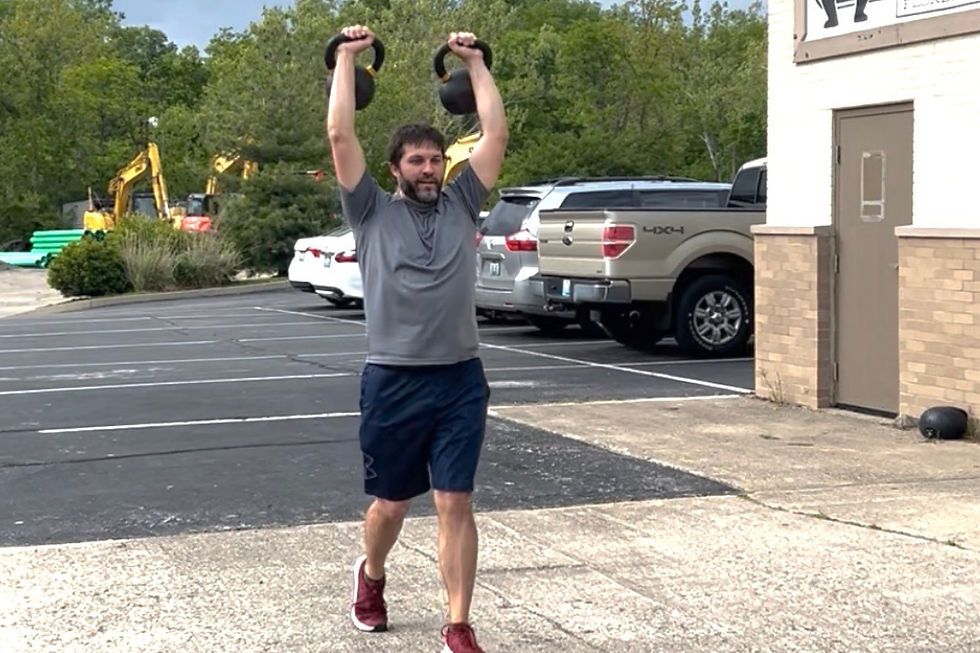
If you enjoy strength training, this is where exercises like loaded carries become incredibly valuable. Farmer's carries, suitcase carries, and other variations teach your body to stabilize, coordinate, and move under load in ways that closely resemble the demands of everyday life. They're wonderfully simple exercises because they don't try to imitate life—they simply reinforce movements life already asks of us.
What's important to remember, however, is that the exercise itself isn't the point. Loaded carries are effective because they prepare us for something beyond the gym. They make it easier to carry groceries, move furniture, lift luggage, help a neighbor, or spend an afternoon working in the yard without feeling physically defeated afterward. That's the transfer we're really after.
Train for the Life You Want to Live

As I've reflected on the conversations I've had with clients over the years, I've realized that very few people come to us because they dream of becoming exceptional at exercise. They come because they want to feel better, move better, and remain capable of doing the things that matter to them for as long as possible.
The client preparing to become a grandmother wasn't chasing a personal record. She wanted to be present for a little boy or girl who hadn't even been born yet. Dave wasn't thinking about grip strength when he helped another couple with their luggage. He simply found himself in a position where his body allowed him to step in without hesitation. The client returning from weeks of business travel didn't miss walking because of what it did for their smartwatch. They missed it because they could feel the difference in their energy, stamina, and overall quality of life.
Those stories have reminded me that fitness isn't really about preparing for workouts. It's about preparing for life. At 3 Pillars Fitness, we believe health and fitness should be simple, approachable, and sustainable because we believe they should serve something larger than themselves. Exercise should help you become more available for your family, more confident in your daily responsibilities, and more prepared for the opportunities life places in front of you. It should make you more capable of saying "yes" when your grandchildren want you to play, when a friend needs help moving, or when someone simply needs an extra hand lifting a suitcase into an overhead compartment.
That's why I don't think the greatest measure of success is found in a mirror or recorded in a workout log. It's found in the quiet moments when you realize your body has become an asset instead of a limitation. It's found in the confidence that comes from knowing you can handle whatever life asks you to carry, whether that's a bag of groceries, a sleeping grandchild, or the responsibilities that come with living a full and meaningful life. To me, that's the kind of strength worth training for.
References
Leong, D. P., et al. (2015). Prognostic value of grip strength: Findings from the Prospective Urban Rural Epidemiology (PURE) study. The Lancet, 386(9990), 266–273.
Westcott, W. L. (2012). Resistance training is medicine: Effects of strength training on health. Current Sports Medicine Reports, 11(4), 209–216.


Comments